

CRM, CMS, SaaS, and Business Systems: How Pixevo Solves Operational Problems
Most companies do not need "more software" just for the sake of having more tools. They need better ways to solve daily problems: lost leads, slow follow-up, scattered content, manual reporting, disconnected platforms, and workflows that depend too much on memory.
Pixevo builds CRM systems, CMS websites, SaaS platforms, workflow automation, dashboards, and custom business systems with one practical goal: make business operations clearer, faster, and easier to manage.
The Real Problem Is Usually Not the Tool
When a business asks for a CRM, CMS, SaaS platform, or automation system, the request often starts with a tool. But the real need is usually deeper.
The business may be dealing with:
- Leads coming from different channels with no clear tracking.
- Sales teams forgetting follow-ups because the workflow is manual.
- Website content that is hard to update.
- Reports that take too much time to prepare.
- Client information stored in spreadsheets, chats, and email threads.
- Teams using tools that do not communicate with each other.
- Managers making decisions without reliable operational visibility.
Before building, Pixevo looks at the workflow behind the request. A good digital system should solve the real business bottleneck, not simply add another login screen.
CRM Systems for Lead and Client Management
A CRM system helps teams manage leads, clients, appointments, tasks, communication history, and sales stages in one structured place.
For many businesses, the problem is not that they lack leads. The problem is that leads are not managed consistently after they arrive.
A practical CRM can help by organizing:
- New enquiries from website forms, ads, WhatsApp, or landing pages.
- Lead source and campaign information.
- Sales stages and follow-up status.
- Team ownership and task assignment.
- Notes, calls, appointment history, and next actions.
- Conversion reporting from lead to customer.
Pixevo builds CRM workflows around how the team actually works. This can mean a lightweight lead management system, a custom CRM dashboard, or a larger CRM/ERP platform for operations, sales, and reporting.
Explore our CRM and ERP solutions if your team needs a clearer way to manage leads and clients.
CMS Websites for Control and Content Growth
A CMS is useful when a business needs control over website content without depending on developers for every small update.
CMS systems can solve problems like:
- Service pages that need regular updates.
- Blog and article publishing.
- Landing pages for campaigns.
- Team, product, or portfolio management.
- Multilingual or location-based content.
- SEO-friendly page structures.
Pixevo works with CMS platforms such as WordPress when the project needs flexible content management, fast publishing, and easy team handover. For more custom needs, we can also build structured content workflows inside a tailored web platform.
The goal is simple: make the website easier to manage while keeping design, speed, SEO, and conversion in focus.
SaaS Platforms for Scalable Business Models
A SaaS platform is useful when a business needs a product that multiple users, teams, clients, or companies can access online.
SaaS systems often solve bigger operational problems:
- Replacing manual service delivery with a digital platform.
- Giving clients access to dashboards, records, or reports.
- Managing subscriptions, billing, or account access.
- Creating role-based workspaces for different users.
- Centralizing business processes into one platform.
- Turning an internal workflow into a sellable product.
Pixevo helps plan and build SaaS platforms with the right foundations: user roles, data structure, dashboards, authentication, payments, workflows, notifications, and scalable architecture.
This is where strategy matters. A SaaS platform should not only look polished. It should be reliable, easy to use, and built around the problem customers are trying to solve.
Learn more about our software development services for custom platforms and web applications.
Workflow Automation for Repetitive Tasks
Many business problems come from repetitive manual work. A team copies leads from one tool to another, sends the same notifications every day, updates spreadsheets, checks campaign forms, and prepares reports by hand.
Automation can reduce these steps by connecting:
- Website forms.
- Meta Ads and Google Ads leads.
- CRMs and spreadsheets.
- Email notifications.
- WhatsApp or internal alerts.
- Appointment workflows.
- Reporting dashboards.
- Third-party APIs.
Pixevo uses tools like n8n, Zapier, Make, webhooks, and custom API integrations depending on the workflow. The best automation is not the most complicated one. It is the one that removes friction without creating confusion.
See our workflow automation service if your team is repeating the same digital tasks every week.
Dashboards and Reporting for Better Decisions
A business cannot improve what it cannot see clearly.
Dashboards and reporting systems help teams understand:
- Where leads come from.
- Which campaigns generate real enquiries.
- How many leads are waiting for follow-up.
- Which services or products get the most interest.
- Where deals or appointments get stuck.
- What tasks are delayed.
- Which workflows need improvement.
Pixevo builds reporting around useful decisions, not vanity metrics. A dashboard should help a manager or team member answer practical questions quickly.
Custom Systems When Off-the-Shelf Tools Are Not Enough
Sometimes a business starts with standard tools and quickly outgrows them. The team needs a workflow that is too specific for a generic platform, or they need several systems to work together in a cleaner way.
Custom systems can include:
- Internal dashboards.
- Client portals.
- Booking and appointment workflows.
- Document and record management.
- Operations management systems.
- Lead tracking platforms.
- Reporting tools.
- Integrations between existing software.
Pixevo builds custom systems when they create real operational value. The goal is not to overbuild. The goal is to design the simplest reliable system that solves the problem properly.
How Pixevo Approaches Problem Solving
Every business system should start with diagnosis. Before choosing CRM, CMS, SaaS, automation, or custom development, we look at what is slowing the business down.
Our process usually includes:
- Mapping the current workflow.
- Identifying repeated manual steps.
- Understanding where data is lost or duplicated.
- Clarifying team roles and responsibilities.
- Defining the reports the business actually needs.
- Choosing the right technology for the problem.
- Building a system that can grow without becoming messy.
This approach keeps the project focused on outcomes: faster follow-up, cleaner operations, better visibility, fewer manual tasks, and a stronger customer experience.
Choosing the Right System
The right solution depends on the problem:
- Choose a CRM when the business needs better lead, client, sales, or appointment management.
- Choose a CMS when the team needs easier website content control and publishing.
- Choose a SaaS platform when the business needs a scalable online product or client-facing system.
- Choose automation when repetitive tasks are slowing the team down.
- Choose a dashboard when decisions are blocked by unclear reporting.
- Choose a custom system when existing tools cannot support the workflow properly.
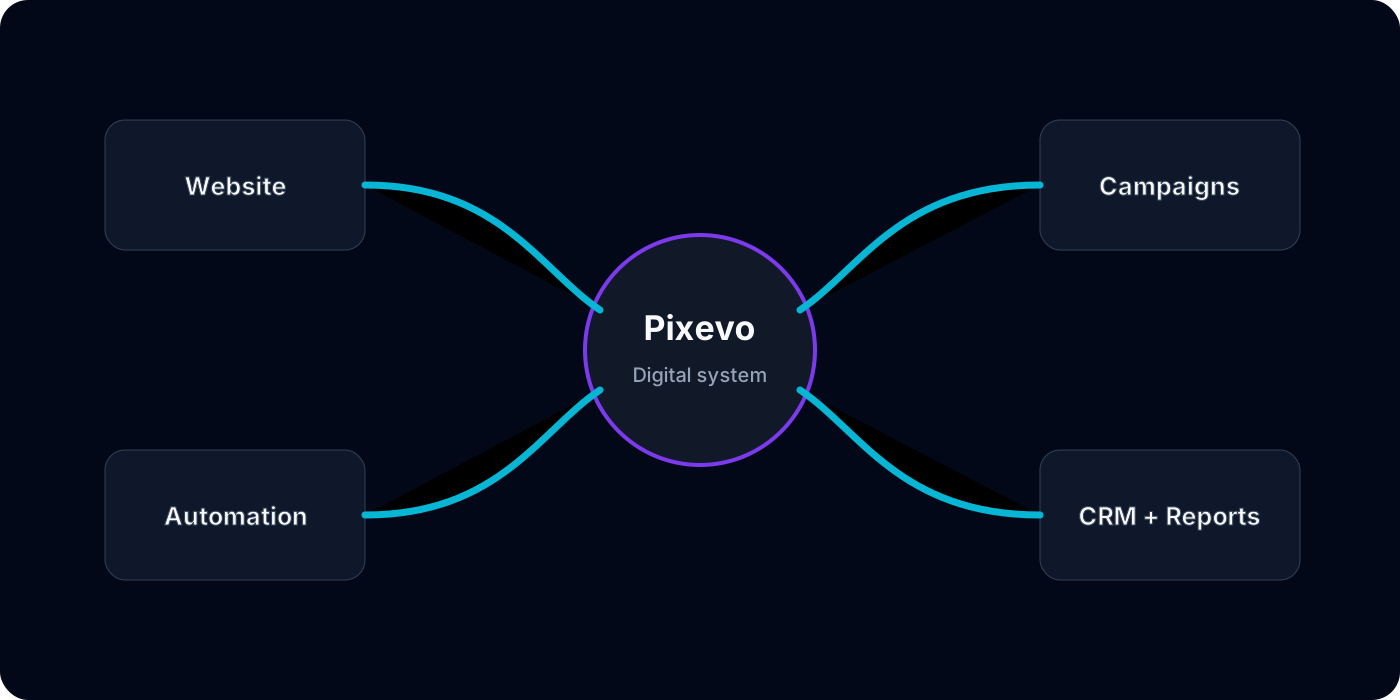
Often, the best solution combines several of these parts into one connected digital workflow.
Final Thoughts
CRM, CMS, SaaS, automation, and custom business systems are valuable when they solve real problems. They should help teams work with more clarity, reduce manual effort, and give managers better visibility into daily operations.
Pixevo helps businesses design and build these systems around the way work actually happens.
If your business has a workflow that feels messy, slow, or disconnected, start with a practical review. Visit our services page or contact Pixevo to discuss what should be improved first.